Triumphal Entry
The Triumphal Entry is the moment Jesus entered Jerusalem as King in fulfillment of prophecy. In deliberate humility, Jesus approached the Holy City on a colt, publicly declaring His messianic kingship while setting in motion the events of the Passion.
Triumphal Entry
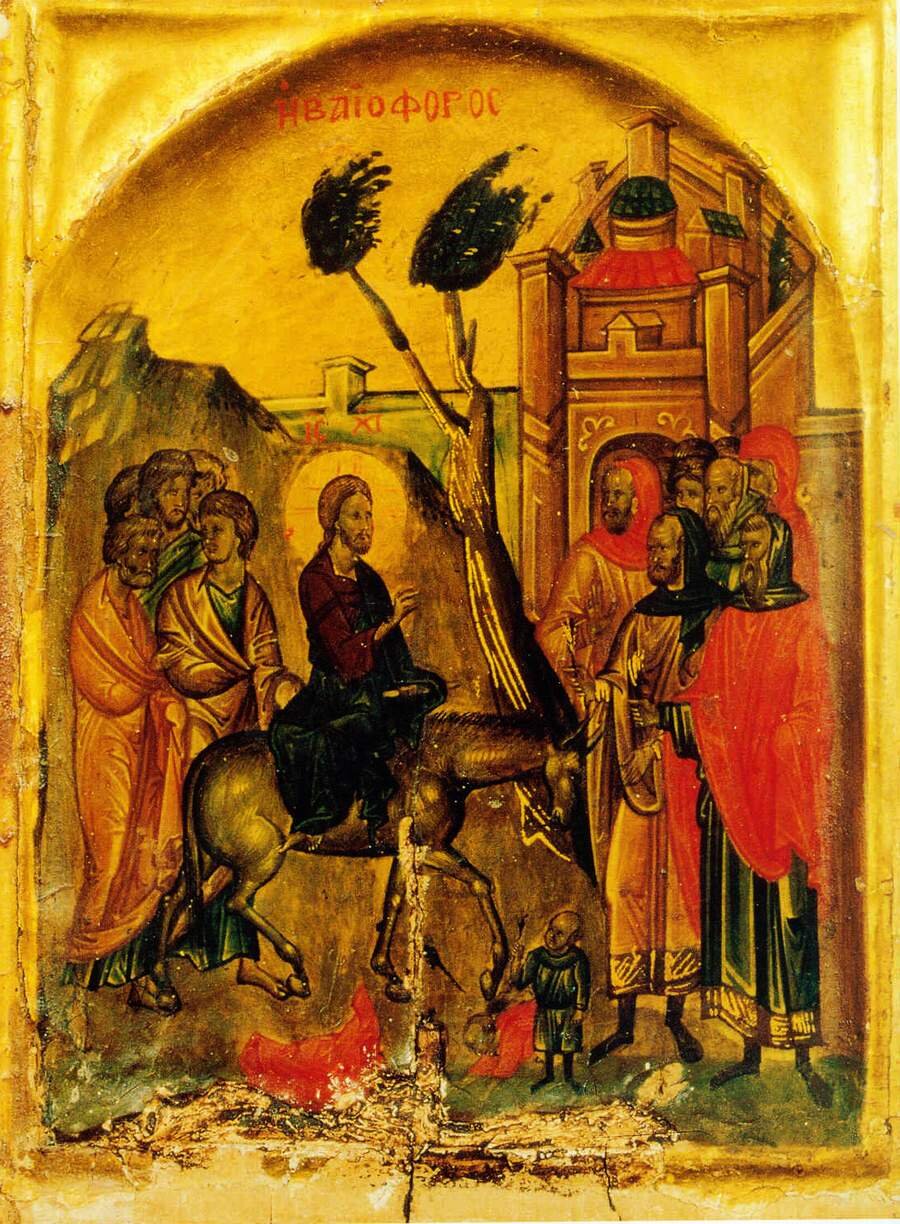
Byzantine icon of the Entry into Jerusalem (ὁ Εἰσέλευσις εἰς τὰ Ἱεροσόλυμα). Fourteenth-century icon from St. Catherine's Monastery, Mount Sinai. Christ rides a donkey toward the gates of Jerusalem; the disciples walk before Him, and the crowd spreads garments and palm branches in the way. The Lord turns toward those who greet Him, fulfilling Zechariah's prophecy of the King who comes meek and riding upon an ass.
Fetching Colt
As Jesus drew near to Jerusalem and came to Bethphage at the Mount of Olives, He sent two disciples ahead with precise instructions.
Matthew 21:1-3
And when they drew nigh unto Jerusalem, and were come to Bethphage, unto the mount of Olives, then sent Jesus two disciples, Saying unto them, Go into the village over against you, and straightway ye shall find an ass tied, and a colt with her: loose them, and bring them unto me. And if any man say ought unto you, ye shall say, The Lord hath need of them; and straightway he will send them.
And so it was. The Son of God issued a command that revealed both His divine foreknowledge and sovereign authority over creation. The disciples obeyed without question, and the owners released the animals at the mere mention of the Lord's need.
Hosanna
Matthew 21:8-9
And a very great multitude spread their garments in the way; others cut down branches from the trees, and strawed them in the way. And the multitudes that went before, and that followed, cried, saying, Hosanna to the Son of David: Blessed is he that cometh in the name of the Lord; Hosanna in the highest.
The words came directly from Psalm 118, the Hallel psalm sung at Passover, and publicly identified Jesus as the Son of David, the King who comes in the name of the Lord. This act of homage fulfilled Zechariah 9:9 even while the chief priests and Pharisees had already determined to put Him to death.
Pharisee Anger
Luke 19:39-40
And some of the Pharisees from among the multitude said unto him, Master, rebuke thy disciples. And he answered and said unto them, I tell you that, if these should hold their peace, the stones would immediately cry out.
The religious leaders who had studied the prophets now demanded that the King be silenced. Their outburst exposed the contradiction: they claimed to guard the law while rejecting its fulfillment standing before them. Creation itself, Jesus declared, would testify if men refused.
Jerusalem Lament
Luke 19:41-44
And when he was come near, he beheld the city, and wept over it, Saying, If thou hadst known, even thou, at least in this thy day, the things which belong unto thy peace! but now they are hid from thine eyes. For the days shall come upon thee, that thine enemies shall cast a trench about thee, and compass thee round, and keep thee in on every side, And shall lay thee even with the ground, and thy children within thee; and they shall not leave in thee one stone upon another; because thou knewest not the time of thy visitation.
The King who had been acclaimed with royal honors moments earlier now looked upon Jerusalem and wept. These tears revealed the depth of divine love confronting the tragedy of human rejection. The long-awaited day of visitation had come. God Himself had come to His people in the flesh, yet they did not recognize Him.
As St. Cyril of Alexandria taught, Christ wept over the city because He desired to see it in happiness through faith in Him and peace with God. Their leaders, though steeped in the Scriptures, remained willfully blind. This rejection brought terrible consequences. Forty years later the Roman armies surrounded the city, starved its inhabitants, and left not one stone upon another, exactly as He foretold.